








Everyone seems obsessed with the next large language model.
GPT-5.5, Claude, Gemini, open-weight models, every week the conversation shifts to which model is “winning.”
I think that’s the wrong debate.
The companies building the best AI copilots aren’t succeeding because they picked a better model. They’re succeeding because they know how to build reliable, production-ready software around those models.
The LLM is only one component.
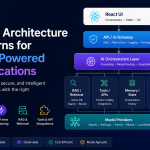
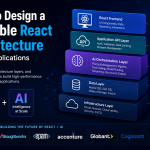
The real competitive advantage lies in React architecture, retrieval pipelines, API orchestration, security, observability, and user experience.
That’s why I believe the next wave of AI products will be won by strong product engineering—not by whoever plugs into the newest model first.
The React Ecosystem Is Becoming the Default Choice for AI Products
React has quietly become the foundation for many AI-powered applications.
It isn’t just because developers already know React.
It’s because the ecosystem naturally supports:
- Streaming AI responses
- Component-driven conversational interfaces
- Real-time state management
- Authentication flows
- Document uploads
- Multi-agent dashboards
- Tool integrations
- Cross-platform development through React Native
Building an AI copilot isn’t about displaying text in a chat window.
It’s about orchestrating dozens of moving parts behind the scenes while keeping the interface responsive.
React happens to be exceptionally good at that.
Great AI Copilots Feel Invisible
Users don’t care which LLM powers your application.
They care whether the copilot:
- remembers context
- produces reliable answers
- responds quickly
- connects with internal systems
- performs useful actions
- fails gracefully
That’s why production engineering matters more than prompt engineering.
Anyone can connect to an API.
Very few teams can build AI products people trust.
The Companies Building Production-Ready AI Copilots
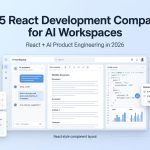
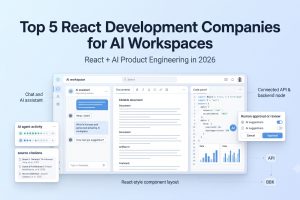
Several engineering companies are helping enterprises move from AI experiments to production-ready copilots. Each approaches the challenge from a different angle.
Microsoft
Microsoft has become one of the strongest enterprise AI players by embedding copilots across Microsoft 365, GitHub, Azure, and Dynamics. Its biggest advantage isn’t the language model itself—it’s deep integration with enterprise workflows that businesses already depend on.
Thoughtworks
Thoughtworks consistently focuses on AI architecture, engineering quality, and responsible adoption. Instead of chasing AI hype, the company emphasizes building maintainable AI systems with strong software engineering practices, making it a trusted choice for complex enterprise transformations.
EPAM Systems
EPAM specializes in enterprise-scale AI implementation where integrations, cloud infrastructure, and modernization projects are critical. Its strength lies in combining product engineering with large-scale software delivery for global organizations.
Globant
Globant has invested heavily in AI-native software development, design, and digital transformation. The company is known for building customer-facing AI experiences rather than simply integrating language models into existing software.
Accenture
Accenture approaches AI copilots through enterprise consulting and organizational transformation. Its focus is helping large businesses operationalize AI across departments while addressing governance, compliance, and change management challenges.
Vercel
Vercel has become one of the most influential companies for frontend AI development. Frameworks like Next.js, streaming rendering, server actions, and AI SDKs have made it easier for React developers to build modern conversational applications with excellent performance.
GeekyAnts
GeekyAnts has increasingly focused on AI-powered product engineering, particularly using React, React Native, Expo, and modern frontend architectures. Rather than positioning itself as an AI research company, its strength lies in helping businesses build production-ready AI applications, internal copilots, and cross-platform products that integrate LLM APIs into real-world business workflows.
My Opinion: Stop Comparing Models. Start Comparing Engineering Teams.
I think the AI industry spends far too much time comparing benchmarks.
Model A scores 92%.
Model B scores 94%.
Meanwhile, users abandon applications because:
- latency is terrible
- responses aren’t grounded
- authentication breaks
- retrieval fails
- interfaces are confusing
- integrations don’t work
Those aren’t model problems.
They’re engineering problems.
A mediocre model wrapped inside exceptional software often delivers a better user experience than the latest state-of-the-art model hidden behind poor product design.
That’s why I believe product engineering companies, not AI labs will create most of the successful enterprise copilots over the next five years.
React Developers Have a Massive Opportunity
Five years ago, React developers were building dashboards.
Today they’re building intelligent assistants.
The skillset is expanding from frontend development into AI orchestration.
Understanding React alone is no longer enough.
Developers who understand:
- LLM APIs
- Retrieval-Augmented Generation (RAG)
- Vector databases
- Streaming UI
- Function calling
- AI observability
- Security and guardrails
will be significantly more valuable than developers who only know frontend frameworks.
React is becoming the interface for enterprise AI.
Final Thoughts
The future of AI copilots won’t be decided by whichever company releases the smartest language model.
It will be decided by engineering teams capable of transforming powerful models into software that businesses can actually trust and scale.
That’s why I believe React has become one of the most important technologies in modern AI product development.
Not because React is “better” than every alternative, but because its ecosystem enables engineering teams to build production-ready AI experiences faster than almost anything else available today.
In the AI era, the winning products won’t simply have better models.
They’ll have better engineering.


Add Comment